

Reflections from BookCity
Ali Jafarabadi
In every age, people search for shelter.
Amid uncertainty, relentless news cycles, economic pressures, and the accelerating pace of modern life, we seek places where we can pause, breathe, and recover a sense of meaning.
For many, books have long provided such refuge.
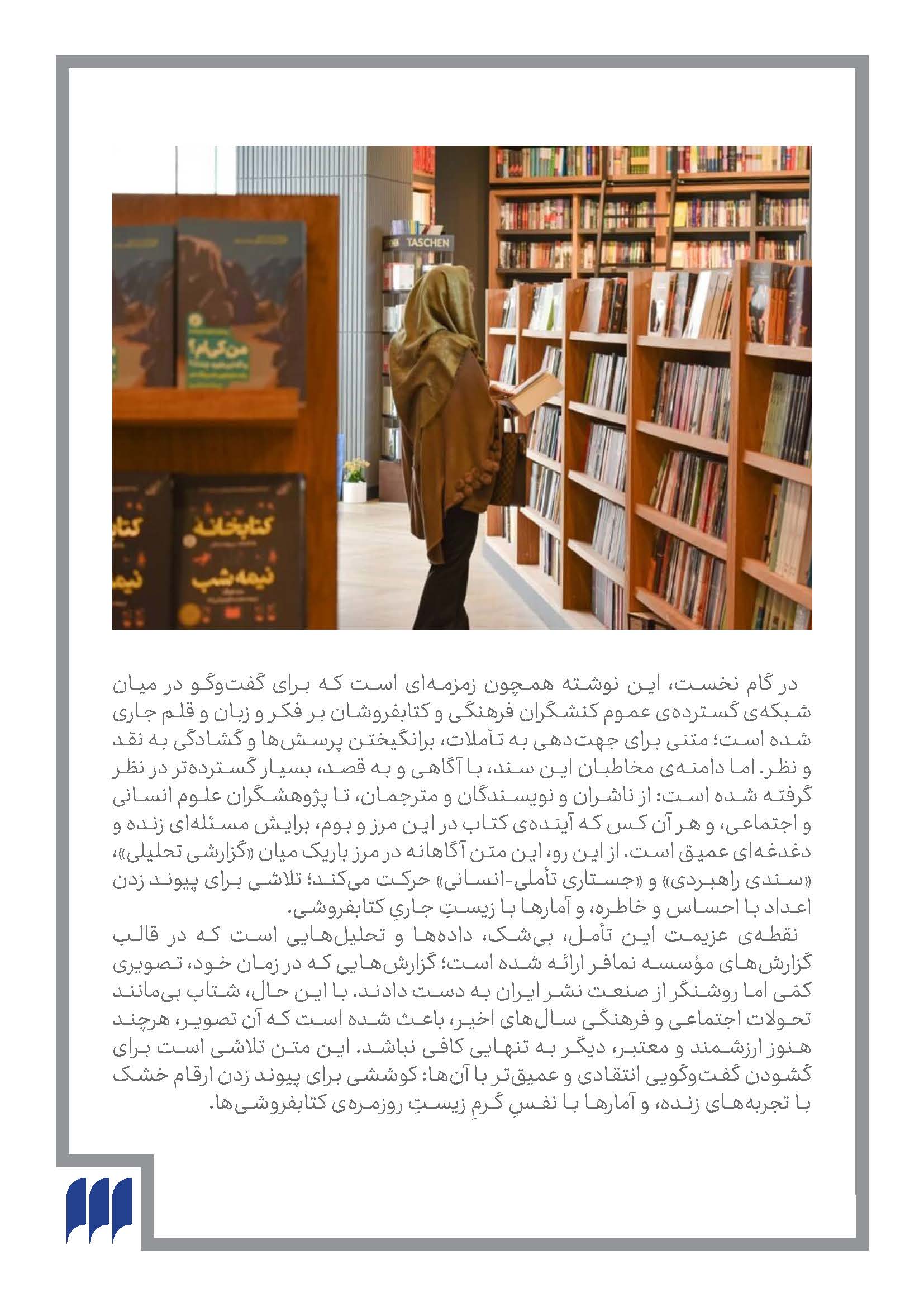
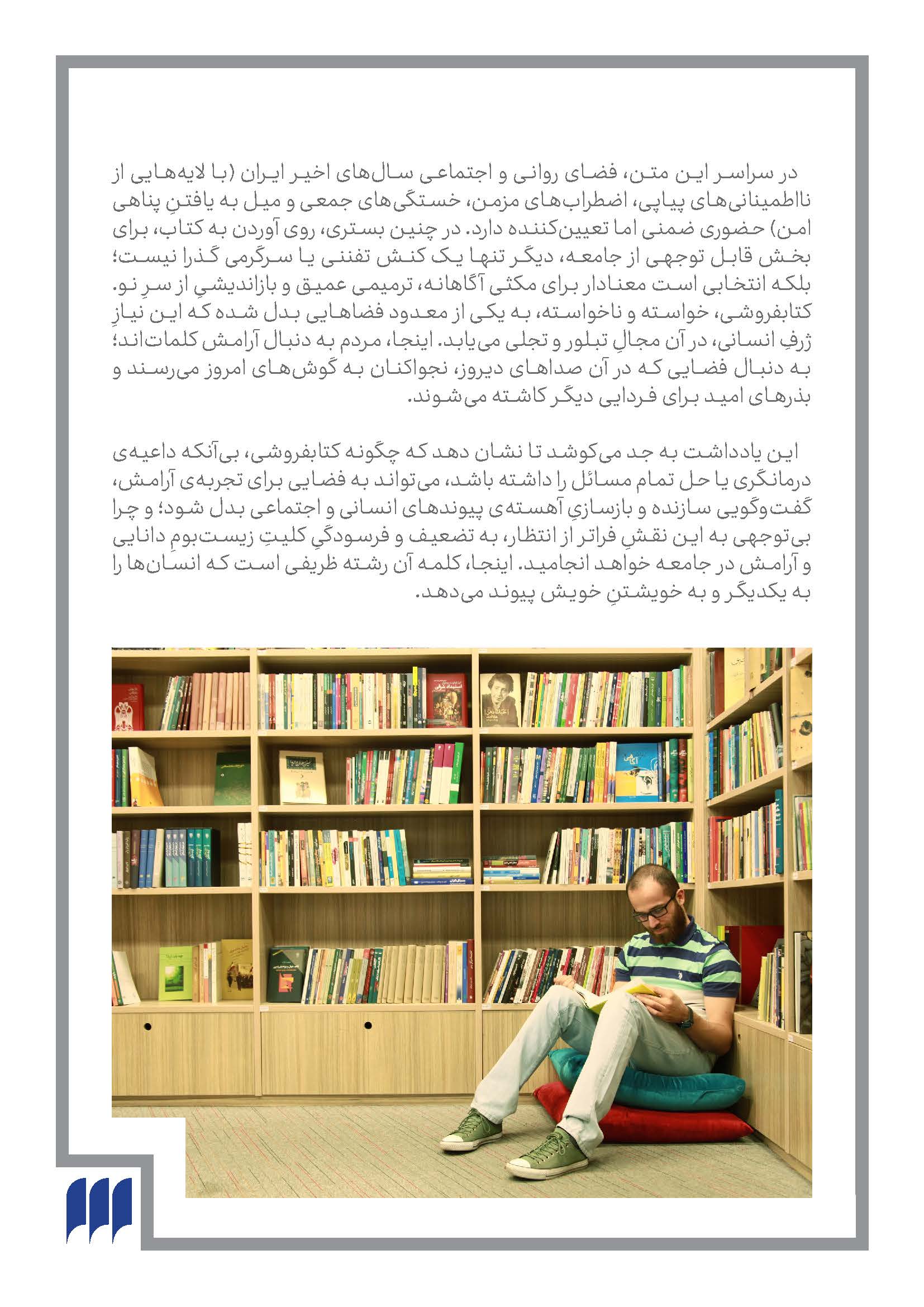
Yet today, it is not only the book itself that matters. Equally important are the spaces where books live: bookstores.
These places are no longer merely points of sale. They have become cultural sanctuaries, spaces of reflection, and meeting grounds for individuals searching for knowledge, connection, and calm.
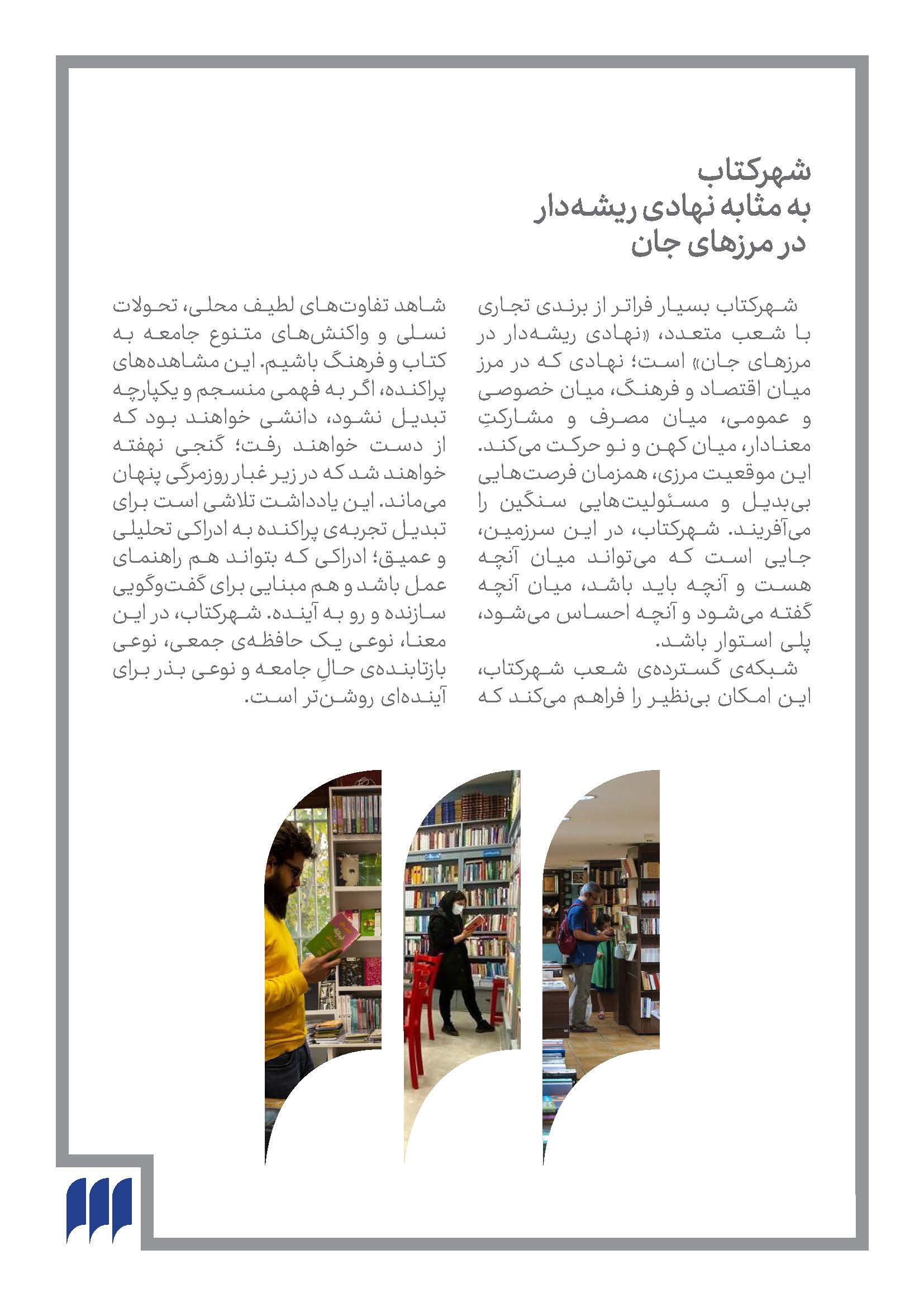
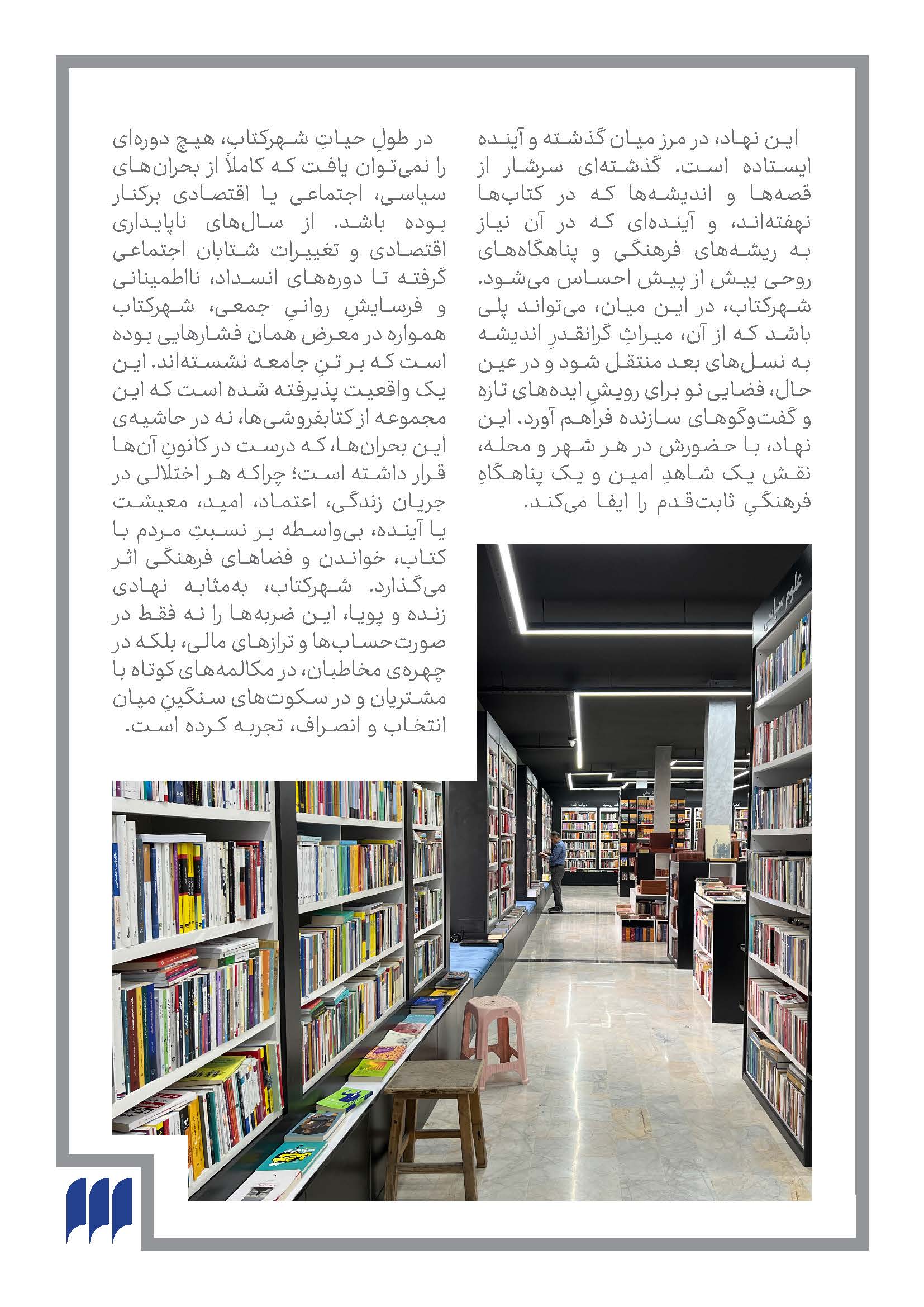
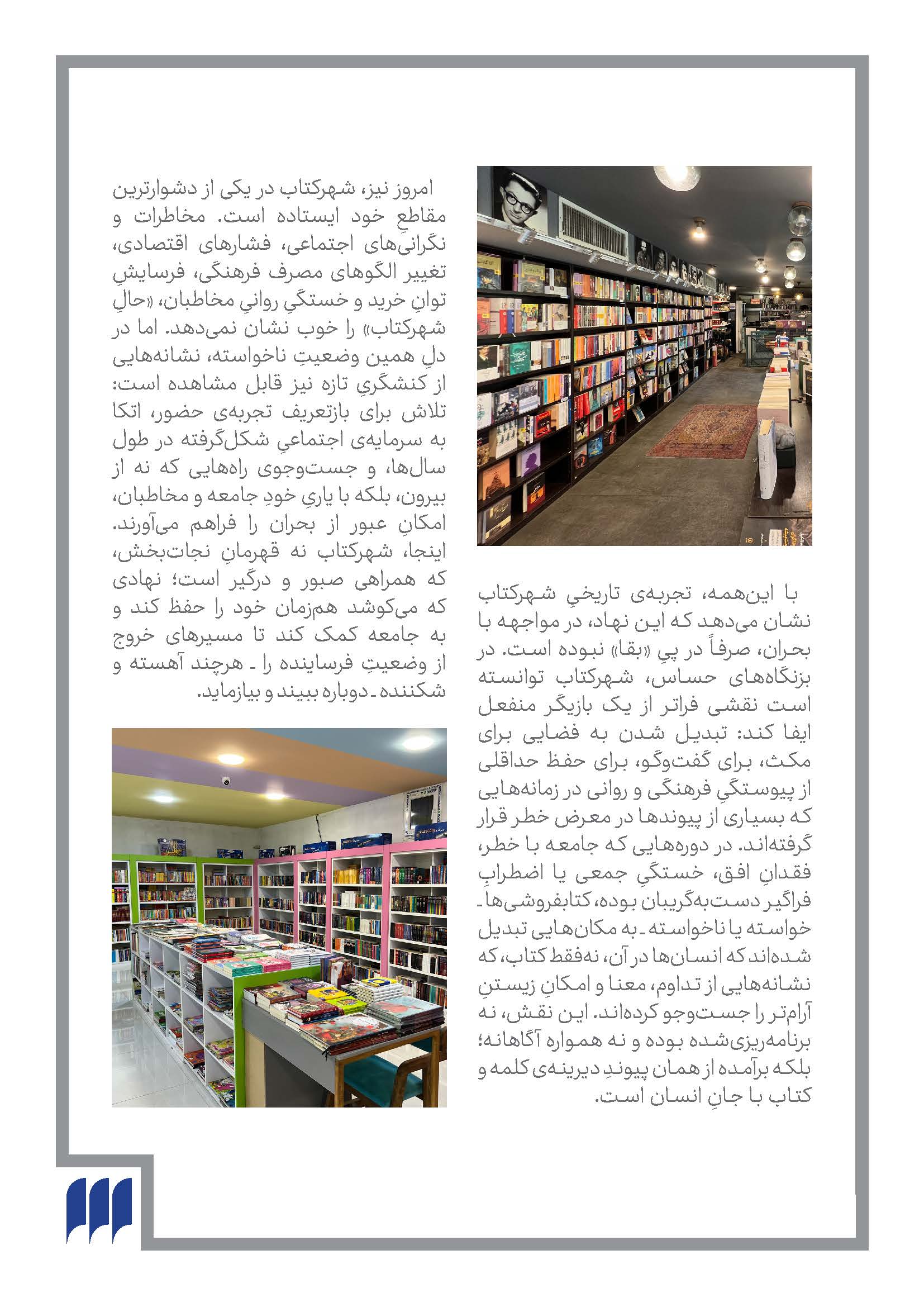
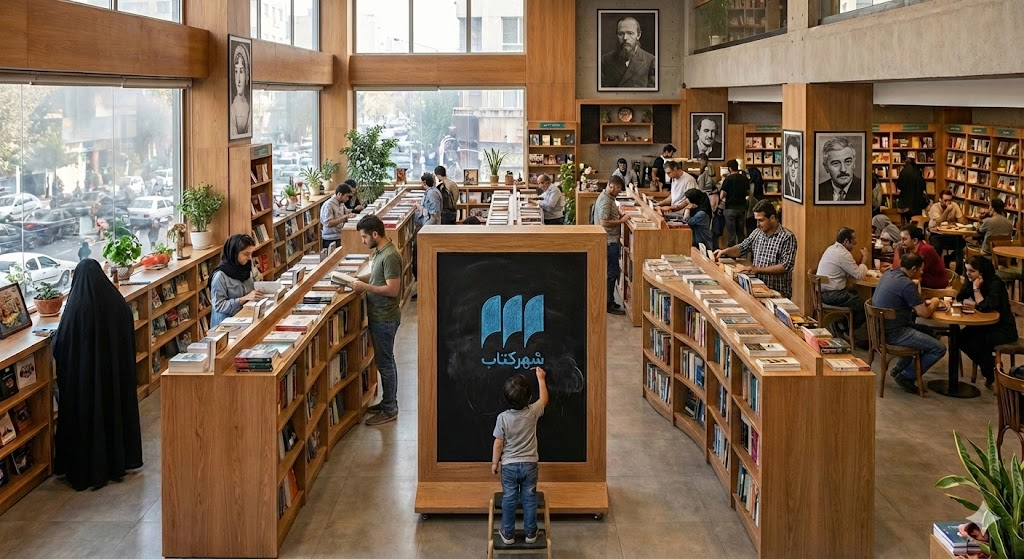
This belief emerges from years of observation across the nationwide network of BookCity bookstores in Iran. Through daily encounters with readers, conversations among shelves, and countless cultural events, we have witnessed a quiet but profound transformation. Increasingly, people come to bookstores not only to purchase books, but also to find perspective, companionship, and moments of stillness in an increasingly fragmented world.
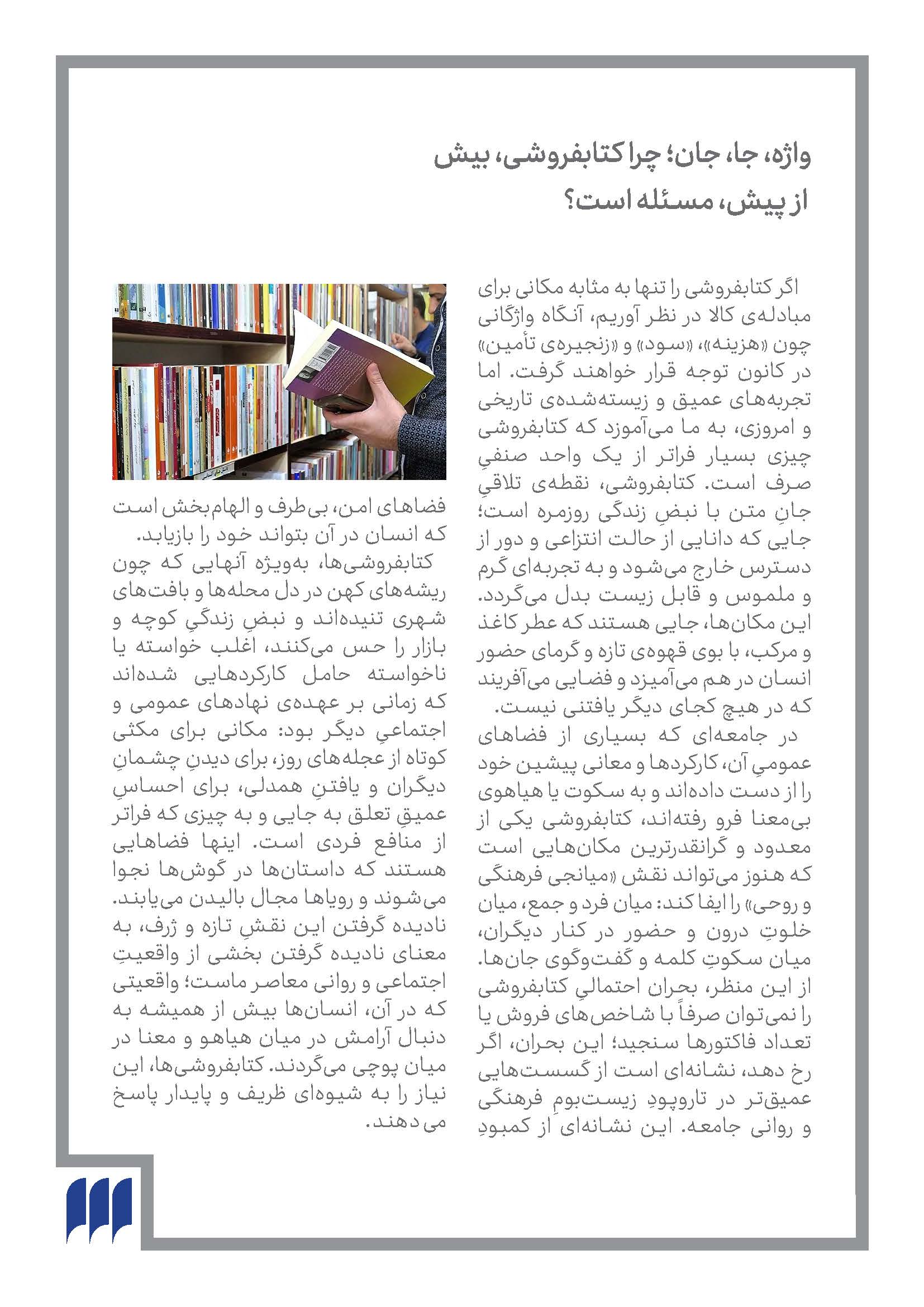
If a bookstore is viewed solely as a commercial enterprise, then discussions naturally focus on sales figures, operating costs, and supply chains.
These concerns matter.
Yet they do not tell the whole story.
A bookstore is where ideas meet everyday life.
It is where knowledge leaves the realm of abstraction and becomes a lived experience.
In societies where many public spaces have lost their ability to foster meaningful interaction, bookstores remain among the few places capable of serving as cultural intermediaries—connecting individuals to communities, solitude to dialogue, and reflection to participation.
For this reason, any crisis facing bookstores should not be understood merely as a retail challenge.
It may also signal deeper fractures within the cultural and social fabric of society.
For decades, cultural policy has often focused on measurable outputs: numbers of published titles, print runs, and production statistics.
While important, these metrics overlook a more fundamental reality: reading is not merely a cognitive act.
It is also an emotional, social, and environmental experience.
Reading requires time, concentration, psychological security, and a sense of purpose.
In an age characterized by distraction and anxiety, these conditions can no longer be taken for granted.
Choosing to read has become an act of intentionality.
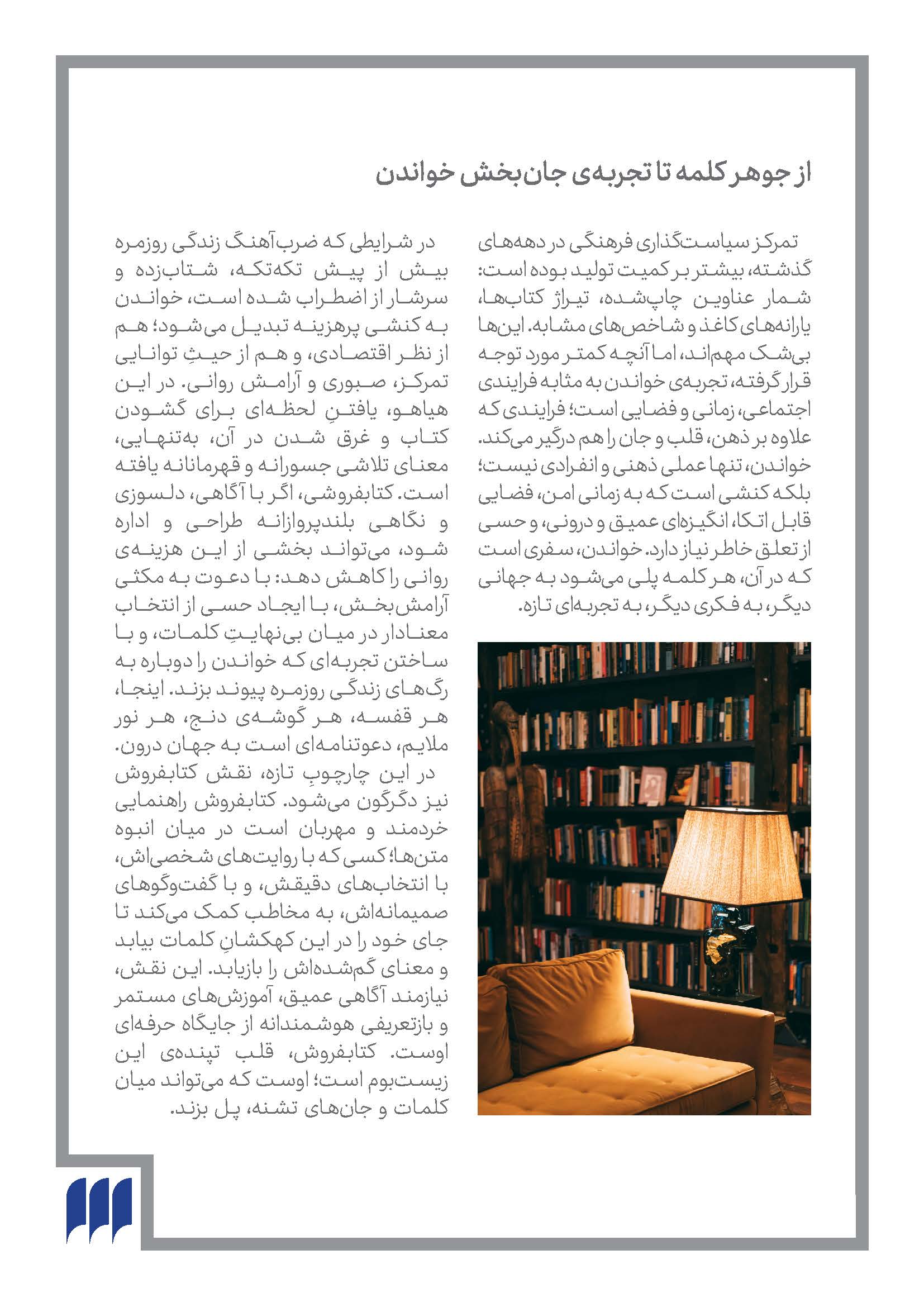
A well-designed bookstore can help restore these conditions.
By creating spaces that invite contemplation, meaningful discovery, and genuine human interaction, bookstores reduce the psychological cost of reading and reconnect books to everyday life.
BookCity is more than a bookstore chain.
It is a cultural institution operating at the intersection of commerce and culture, private experience and public life, tradition and innovation.
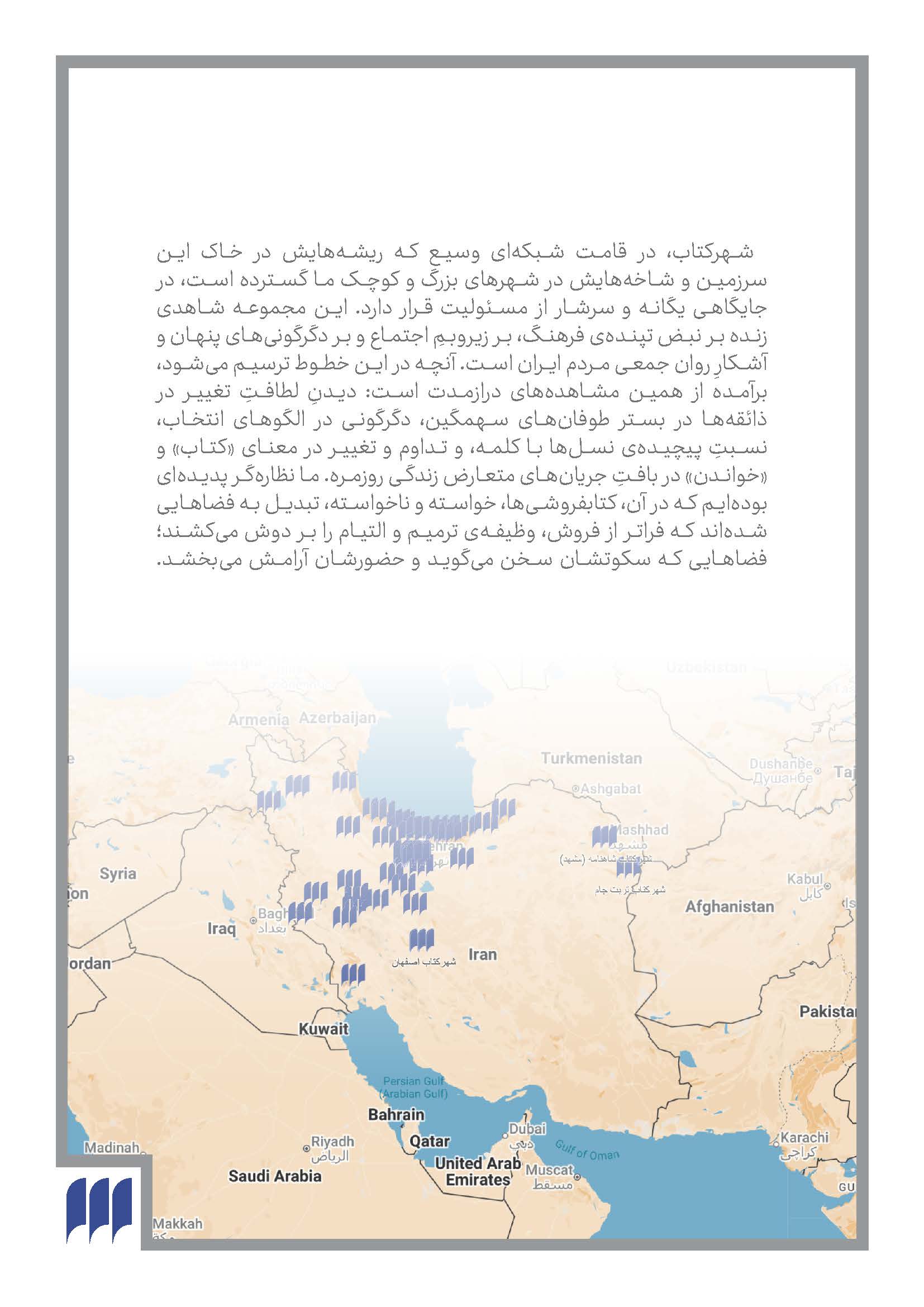
Its network extends across large cities and smaller communities throughout Iran, providing a unique window into changing reading habits, generational shifts, and evolving cultural needs.
Over the years, BookCity has lived through periods of economic instability, social transformation, uncertainty, and collective fatigue.
Like the society around it, it has experienced the pressures that shape contemporary life.
Yet throughout these challenges, BookCity has continued to serve as a place where people gather around ideas, conversations, and shared cultural experiences.
Again and again, we have seen bookstores become spaces where individuals search not only for books, but also for continuity, meaning, and hope.
Statistical reports can reveal important trends.
They can show increases in published titles, declining print runs, changing purchasing patterns, and shifts in consumer behavior.
But numbers alone cannot explain what happens inside a bookstore.
They cannot fully capture the hesitation of a reader carefully choosing a single book in difficult economic times.
They cannot measure the comfort someone finds while browsing shelves after a difficult day.
Nor can they quantify the cultural value of a conversation sparked by a book recommendation.
To understand the future of books, we must look beyond statistics and pay attention to lived experience.
The future bookstore is not a warehouse of products.
It is a dynamic cultural ecosystem.
A place where reading, creativity, learning, social connection, and well-being intersect.
At BookCity, we envision three complementary dimensions of this future:
Together, these dimensions transform the bookstore into something larger than a commercial venue: a living cultural institution capable of nurturing both individual growth and collective resilience.
Many BookCity branches are already experimenting with new forms of cultural engagement, community programming, and reader-centered experiences.
The challenge ahead is to deepen, connect, and expand these efforts across the entire network.
Our ambition is not simply to preserve bookstores.
It is to strengthen their role as places where culture remains alive, where dialogue remains possible, and where people can rediscover meaningful connections—with ideas, with one another, and with themselves.
In times marked by uncertainty, bookstores carry a quiet but powerful responsibility.
They remind us that culture endures.
That words can heal.
That thoughtful conversation still matters.
And that even amid noise and confusion, spaces of reflection and hope can survive.
A bookstore is more than a business.
It is an ecosystem of knowledge, imagination, and belonging.
It is a place where communities remember who they are and imagine who they might become.
At BookCity, we believe that bookshelves are not simply furniture filled with printed pages.
They are anchors for the human spirit.
And in every storm, people need anchors.
This essay is a free English adaptation of a Persian text originally published by BookCity in the days immediately preceding the war. The experience of war that followed only reinforced its central insight: that bookstores are more than commercial spaces—they are shelters for meaning, community, and the human spirit in times of uncertainty.
Download the original Persian essay (PDF)