


Whenever adults start pontificating about adolescents and literature, it never takes long before someone sighs: “They’re glued to their smartphones all day.”
Well, yes, we are. The phone sits permanently in our palms. We text friends, stream music playlists, map subway connections, follow live football scores, edit social video reels, study for exams, and play games. And half the time, admittedly, we mindlessly scroll across social algorithms without any deliberate destination. Denying that reality would be disingenuous.
Yet books and smartphones do not inhabit two hostile, incompatible galaxies. On the very same day I spend hours browsing Instagram, I might comfortably read a hundred pages of a novel before bed. A short viral clip might be the exact spark that introduces me to a title I end up loving. At other times, I catch myself checking notifications every five minutes mid-paragraph, irritating myself with my own fractured attention.
The core dilemma is not whether smartphones are morally good or bad; the real battlefield is human attention. Countless digital platforms relentlessly clamor for just three seconds of our focus. A book—and a literary novel in particular—is famously stubborn. It demands: Stay with me for a few chapters, even if nothing dramatic has exploded yet. You have to inhabit an unfamiliar mind, absorb world-building, and hold narrative details in memory until their resonance blossoms forty pages later. (Of course, nobody is obliged to endure a terrible, poorly written book merely as a grueling concentration drill.)
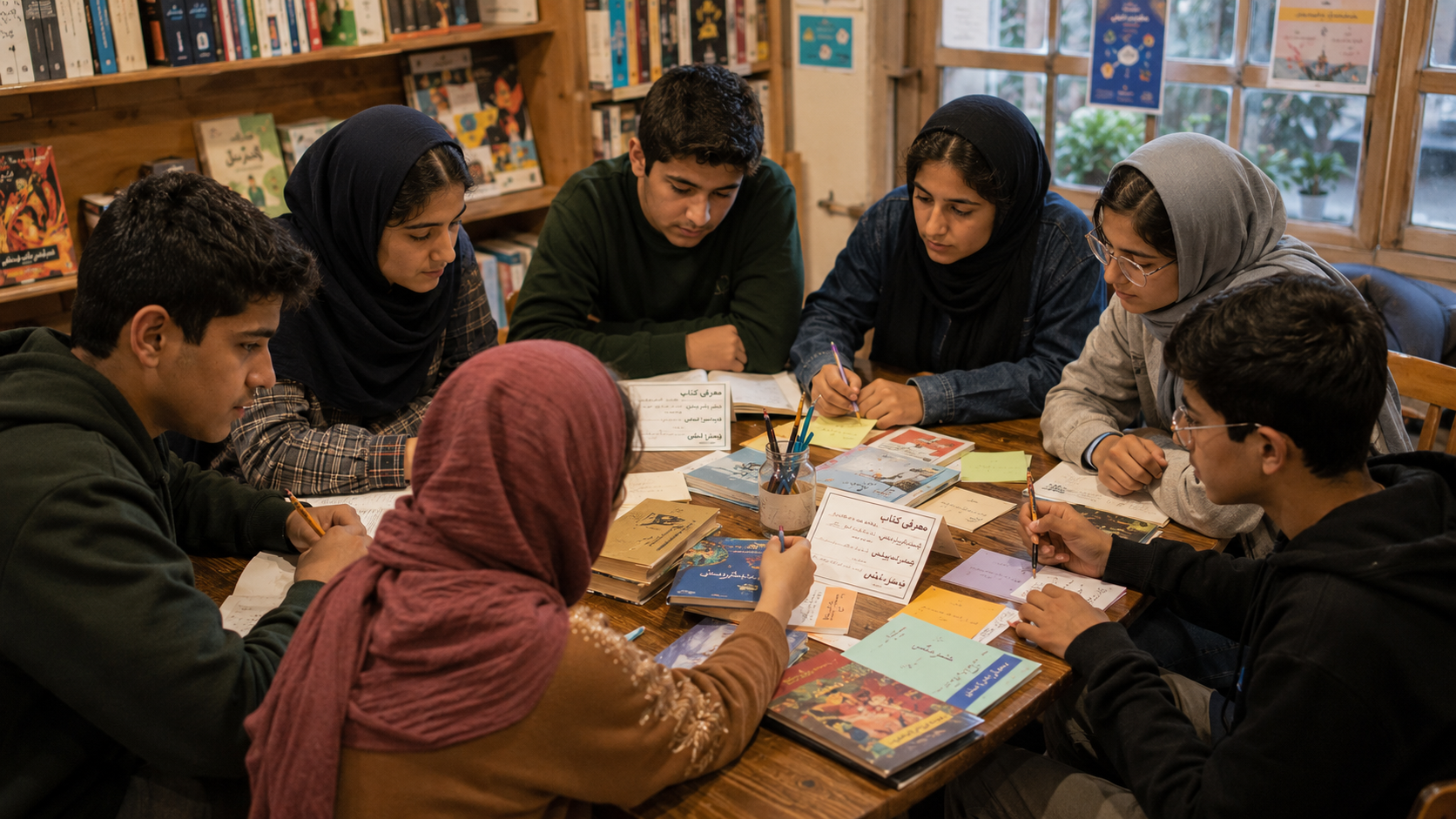
During our organizing sessions for the Sand Fox Award (sandfox.ir)—the independent national prize established under BookCity’s auspices where Iranian readers aged 11 to 18 independently critique and crown the nation’s finest literature—we passionately debate both literature and media strategy in the same breath. We evaluate a novel’s psychological depth, and five minutes later argue intensely over which opening visual frame will stop young viewers from swiping past an outreach reel. The video is never intended to replace the book; its sole purpose is to awaken authentic curiosity.
If we sensationalize everything in the opening three seconds with screaming fonts, we might grab views, but we become indistinguishable from thousands of disposable advertisements. If we speak in stiff, academic tones, adolescents scroll away instantly. Striking that honest balance requires constant trial and error.
Ultimately, when reading peer reflections in Sand Fox, I place far more trust in a candid adolescent review like “I despised this protagonist, yet I couldn’t put the story down,” than in a polished marketing blurb declaring “an unforgettable masterpiece of hope and friendship.” The latter could be stamped onto a hundred generic covers.
Reading for me in this era means actively choosing, at times, not to jump between ten competing distractions. It is neither a heroic crusade nor a war against technology. It is simply choosing to linger inside a single story, and discovering where that story can truly take you.