


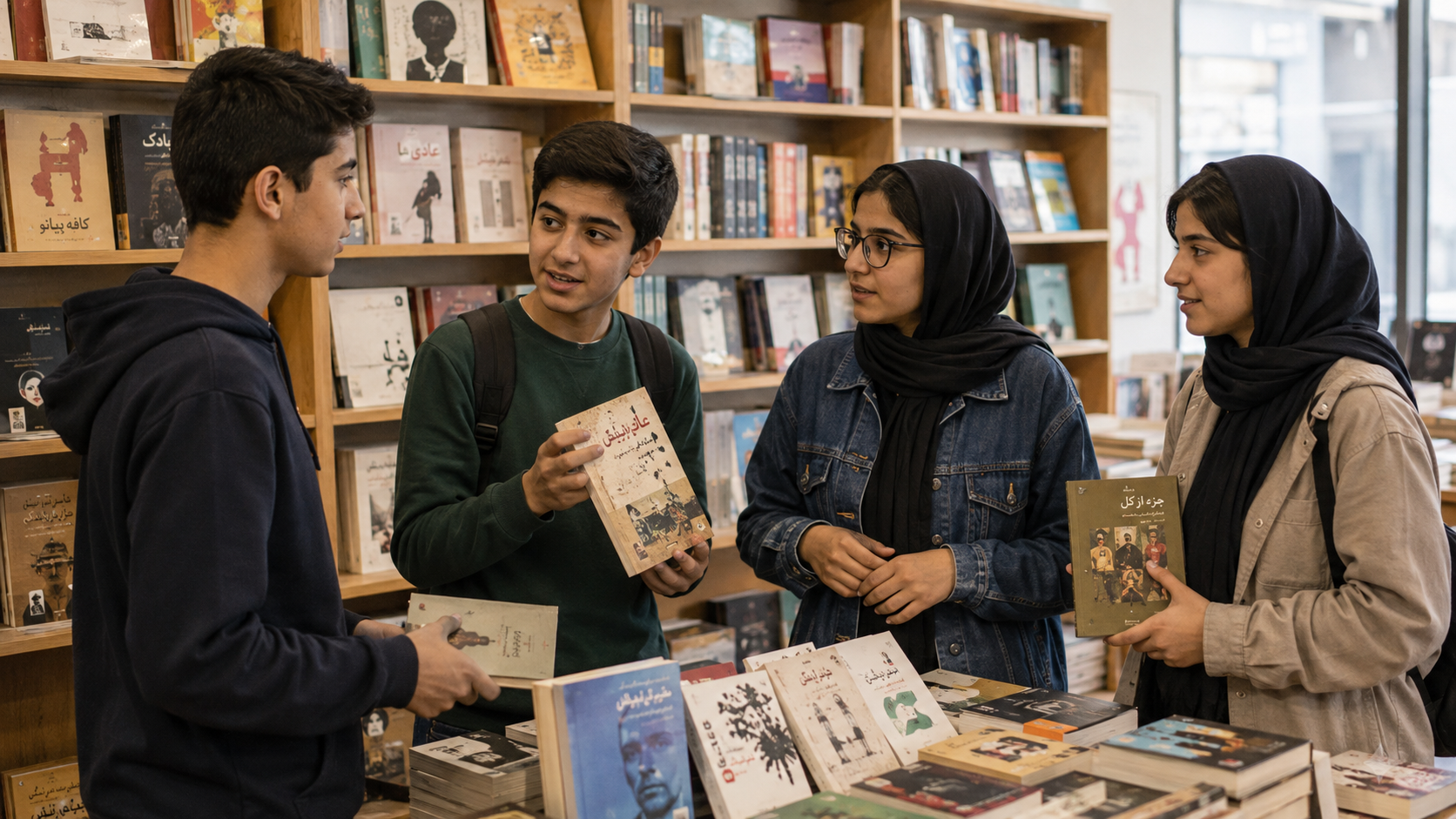
In the Sand Fox Award, we never rely on a single isolated number. For every participating title on the evaluation platform (sandfox.ir), one can readily see both how many young people voted and the book’s cumulative rating out of five stars. Even these two figures often reveal contrasting stories: one volume may attract a vast readership yet yield a moderate score, while another reaches fewer readers who nonetheless award it near-unanimous top marks.
Yet beyond numerical scores, the most captivating component of the Sand Fox initiative—established by BookCity as Iran’s premier youth-adjudicated literary prize where readers aged 11 to 18 independently critique and select outstanding national and translated literature—is the concise commentaries adolescents append to their ballots. A participant might write: “The ending stayed with me for two solid days,” or “The main protagonist irritated me intensely, but perhaps that is why I believed in them.” Far from substituting for quantitative ratings, these brief qualitative reflections explain precisely where a three-star or five-star verdict originated.
Most readers reflexively categorize books into binary reactions: “it was great” or “I didn’t like it.” Such shorthand is perfectly normal. No reader is obliged to stage formal literary criticism after closing every final chapter. Yet when young people are invited to take one step further and inquire “why?”, they often surprise themselves by uncovering the underlying nuances that governed their choice.
Sometimes the explanation is straightforward: the narrative velocity was irresistible. At other times, it is far more complex: an unlikable protagonist combined with hypnotic pacing, a translation that transformed the author’s voice into something either wonderfully fluid or stiffly formal, or a single unforgettable scene that outshone the rest of the book. Importantly, articulating these responses does not require academic jargon. Observations such as “the mid-section dragged,” “the prose felt overly wordy,” or “the conclusion felt deeply earned” may sound casual, yet they mark the precise threshold where autonomous aesthetic standards and critical literary discernment take root.
This qualitative feedback holds immense diagnostic value for the wider literary ecosystem, including authors, translators, independent publishers, and bookshops. When adolescents across Iran collectively note how a translation reads or how cover aesthetics shape their choices, they provide unvarnished, authentic market insights that adults cannot engineer from top-down focus groups. Sand Fox deliberately preserves a dedicated space alongside every ballot for young judges to answer that pivotal question: why? Cultivating that critical habit transforms reading from passive leisure into an enduring practice of civic and intellectual discernment.