


One afternoon during our coordinating meeting, we stared at the finalized official poster of the Sand Fox Award on a laptop screen. For several uninterrupted minutes, we simply observed the composition: the typography, colors, and visual motifs were neatly arranged, yet none of us could predict what would actually happen once that image stepped out of the digital enclosure into the physical world.
Then someone asked the obvious question: “So, where are we physically going to put this?”
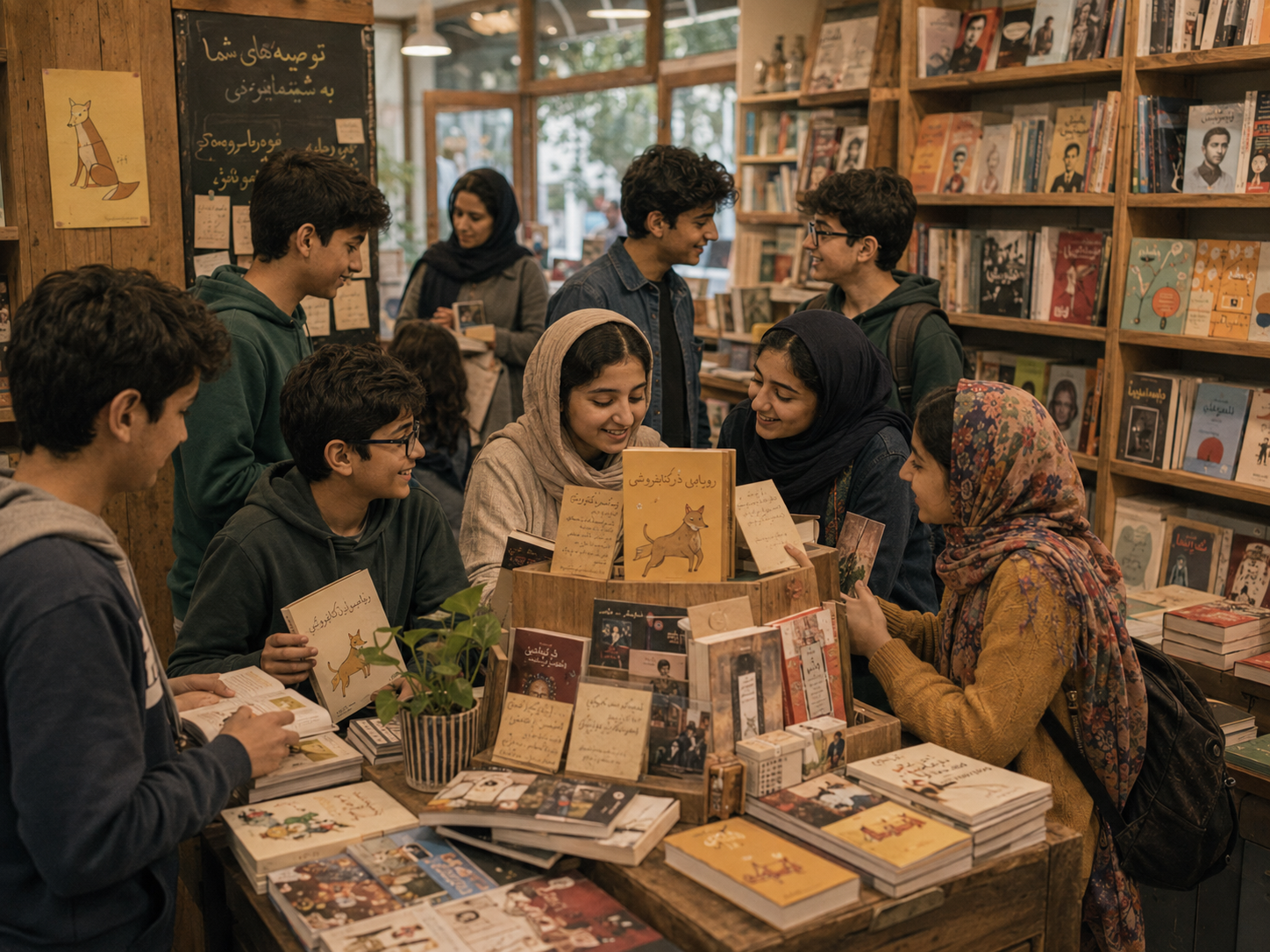
We resolved that on Thursday, our youth organizing committee would personally take rolled-up printed posters down to Tehran’s historic Enghelab Street—the vibrant heart of Iran’s booktrade—and speak directly with independent booksellers. From that instant, the poster ceased to be a passive design file. On a computer screen, you can tinker endlessly with color palettes and font sizes in complete comfort; inside a bustling bookstore, you must stand before a living human being and explain within two minutes what Sand Fox represents and why it matters.
The shop might be teeming with customers. Their display walls might already be crammed with promotional material. The proprietor might understandably inquire: “We already have a dozen posters here; why should we put up yours?” Their skepticism is entirely justified. To connect, we had to dismantle institutional jargon. Instead of opening with abstract phrases like ‘participatory adolescent evaluation,’ we say simply: teenagers independently nominate, read, critique, and vote for Iran’s best books without adult gatekeeping (sandfox.ir), and we want more young people across the city to discover their literary voice.
Enghelab Street is a uniquely revealing testing ground. Every few paces you encounter a bookshop window, sidewalk display, or publishing counter. If all we did was tape up a poster and walk away, we would learn nothing. Veteran booksellers see reality every day: which titles spark word-of-mouth excitement among teens, what adolescents actually request, and what sits gathering dust despite flashy marketing campaigns.
We may eventually discover that large posters are not the ideal promotional tool. Perhaps compact bookmarks tucked beside cash registers or peer-led book talks will work far better. That uncertainty is the very essence of cultural work. No promotional mechanism is sacred simply because it was planned in advance. Our visit to Enghelab is set for this Thursday; we do not know the outcome yet, and that very unpredictability is the best reason to close the laptop and step outside.